Soft Autumn Color Palette
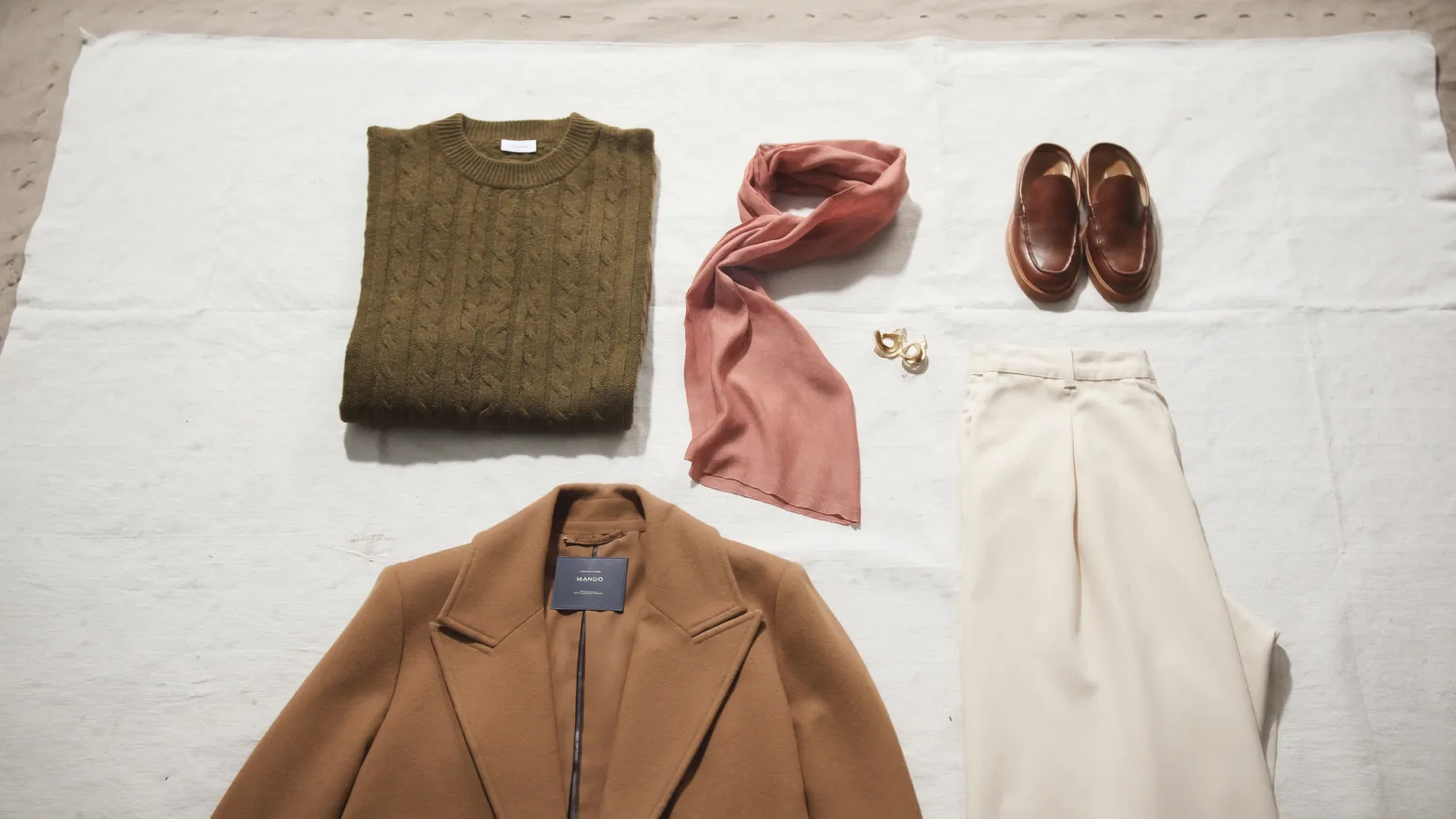
Soft Autumn is a muted, warm-leaning color season of light-to-medium depth. Its colors look softened and slightly greyed, like camel, sage, olive, soft teal and dusty rose, and on the seasonal color wheel it sits between Soft Summer and True Autumn.
Ask an AI about Soft Autumn
These open a chat with the question already typed, pointed at this page. It asks for a balanced answer, including where this guide may not fit you.


| Main quality | Muted first, warm second |
|---|---|
| Chroma (saturation) | Low: colors look mixed with a little grey or brown |
| Hue (temperature) | Warm-neutral: leans golden, but only a little |
| Value (depth) | Light to medium; many guides say medium |
| Contrast | Low to medium between hair, skin and eyes, judged against your own skin depth |
| Other name | Muted Autumn |
| Easiest neutrals | Camel, taupe, mushroom, coffee, cream |
| Easiest metals | Brushed gold, bronze, rose gold, antique brass |
| Harder to wear | Black, optic white, neon, icy pastels |
| Neighbor seasons | Soft Summer (cooler) and True Autumn (warmer, richer) |
The Soft Autumn color palette
A color season describes colors by three separate qualities. Chroma is how saturated a color is. Hue is how warm or cool it is. Value is how light or dark it is. Soft Autumn colors are low in chroma, lean warm, and sit at light-to-medium value: no very dark colors like black, and no very saturated ones like neon orange.
Many stylists find that colors like these look calm next to Soft Autumn coloring, and that very saturated colors can draw attention away from the face. This is a styling tendency, not a rule about your face.
Below are 30 reference shades with names and hex codes. A hex code shows how a color looks on a screen. Fabric looks different in different light, so use the swatches as a guide when shopping, not as an exact match.
See the difference
Color analysts test colors with a plain fabric cape under the face, in the same light. Drag the handle to compare black, which is harder to wear for many Soft Autumns, with camel from the palette.
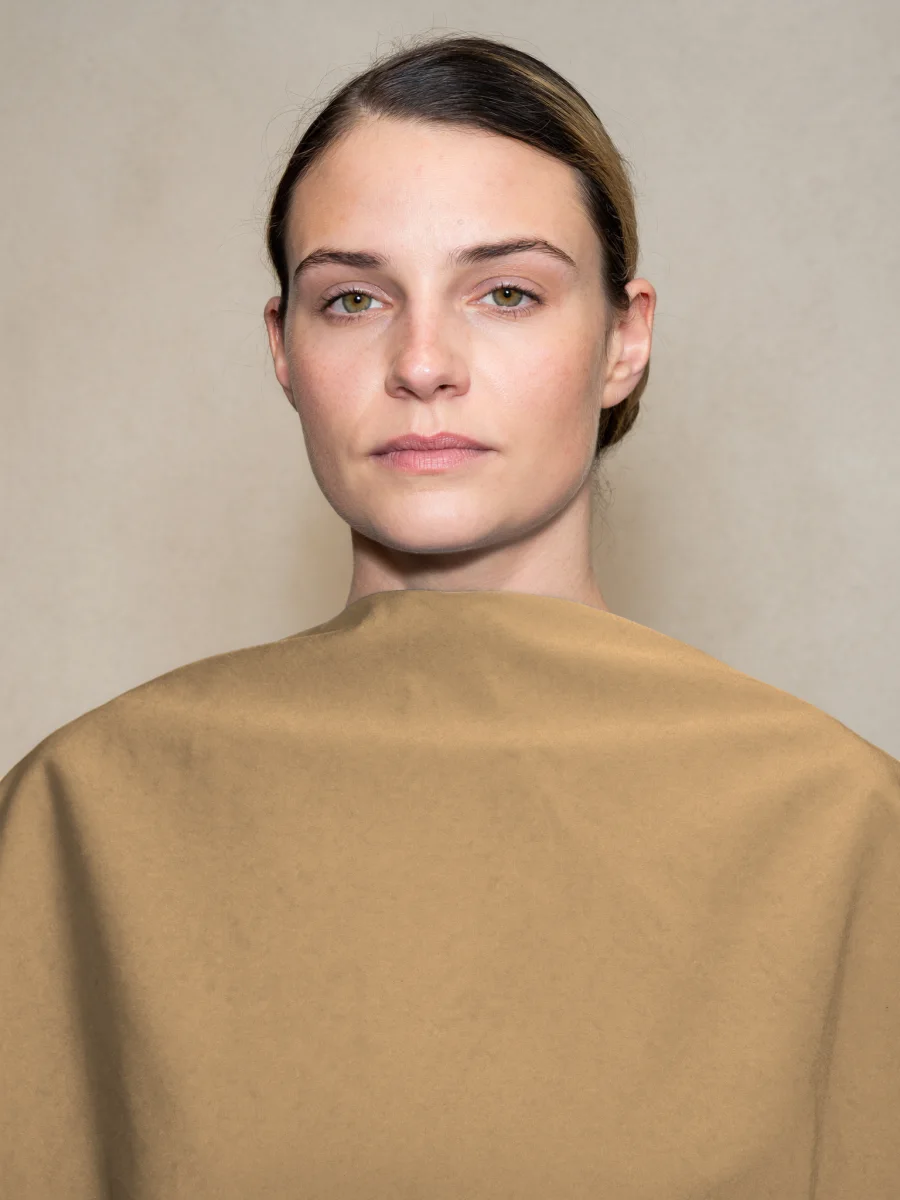 Camel
Camel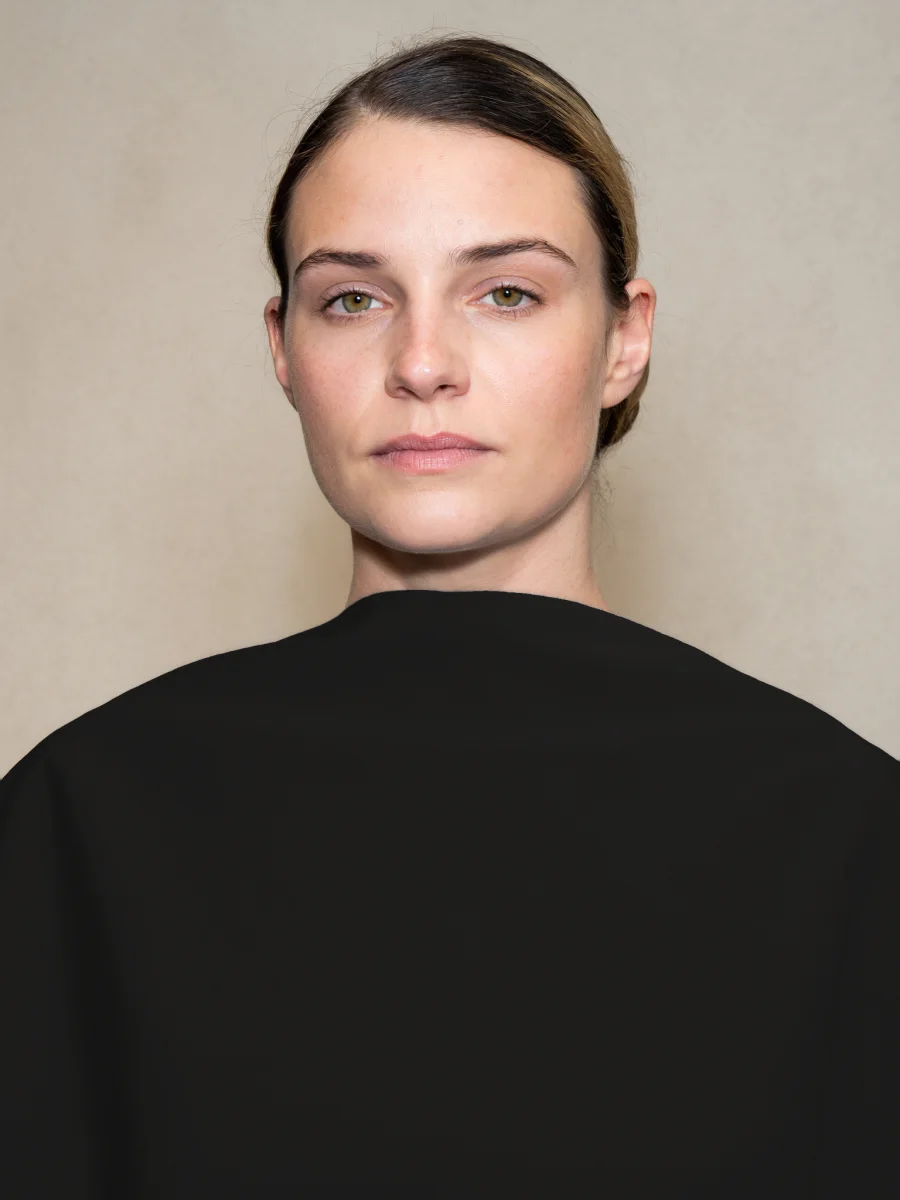 Black
BlackSoft Autumn neutrals and browns
The basics are warm and slightly greyed: cream instead of optic white, coffee instead of black, and camel, taupe and mushroom in between. Coats, trousers and knitwear in these colors go with the rest of the palette.
Soft Autumn greens
Green is a large family for Soft Autumn. Sage and eucalyptus are light; moss and olive are earthy; muted pine is the deepest green in the palette. Bright grass green and cool emerald are more saturated than the palette.
Soft Autumn blues and teals
Soft Autumn blues lean green: duck egg, aqua grey, soft teal and petrol. For denim, mid-wash with a slightly warm, faded look fits the palette.
Soft Autumn pinks and reds
Pinks are dusty and warm: muted salmon, dusty rose and rosewood. Reds are earthy: terracotta, soft brick and a muted tomato red. Candy pinks and fire-engine reds are more saturated than the palette.
Soft Autumn purples
The palette's purples are greyed and warm: heather, plum mauve and a soft aubergine. Violet and bright lilac are cooler and clearer.
Soft Autumn yellows and oranges
Yellows are buttery and golden rather than lemon: butter, honey and mustard. Apricot and muted pumpkin cover the orange side.
Colors to avoid for Soft Autumn
These colors are harder to wear for many Soft Autumns because they are very dark, very saturated, very cool or very clear. They are not forbidden. Each one has a softer version in the palette. If you love one of them, wear it away from the face (trousers, shoes, a bag), in a small amount, or with a palette color between it and your face, such as a cream scarf or a camel collar.
- Black → Coffee
#6F5543 - Optic white → Cream
#EDE3D1 - Fuchsia → Dusty rose
#C4978E - Royal blue → Soft teal
#5F8A86 - Icy grey → Mushroom
#A8998A - Neon orange → Terracotta
#B86E52 - Lemon yellow → Butter
#E3D19E - Cool burgundy → Rosewood
#9E6B66
Can Soft Autumn wear black, navy or white?
The questions people ask most often, with a short answer first.
Can Soft Autumn wear black?
Yes, but for many Soft Autumns it is one of the harder colors near the face: its depth and contrast can dominate soft coloring. Coffee, espresso and warm charcoal give a similar dark anchor. To wear black you love, keep it below the waist, or add a cream, camel or taupe layer near your face.
Can Soft Autumn wear navy?
A greyed, softened navy usually fits better than an inky or bright one. Petrol and warm denim give a similar effect and are in the palette.
Can Soft Autumn wear white?
Optic white is much brighter than the rest of the palette. Cream, ivory and oatmeal give a fresh look with less contrast. Under a camel or taupe jacket, a white shirt looks softer.
Can Soft Autumn wear grey?
Yes. Warm greys such as mushroom, taupe and stone are among the palette's neutrals. Cool blue-greys are further from the palette; a warm scarf or warm metal jewelry helps if you wear them.
Can Soft Autumn wear red?
Yes. Muted, warm reds such as terracotta, soft brick and a muted tomato red are in the palette. Blue-based cherry red and bright scarlet are cooler and more saturated.
Can Soft Autumn wear burgundy?
A soft, brown-leaning burgundy like rosewood fits the palette. Deep, cool wine and berry shades are darker and cooler, closer to Winter palettes; wear them away from the face or with camel or cream.
Can Soft Autumn wear purple?
Yes, in greyed and warm versions: heather, plum mauve and soft aubergine. Violet, royal purple and icy lavender are clearer and cooler.
Can Soft Autumn wear silver?
Yes, especially brushed or matte silver. Many Soft Autumns find warm metals such as brushed gold, bronze and rose gold easier, but the finish often matters more than the metal: soft finishes sit closer to muted coloring than mirror shine.
Soft Autumn clothing and outfits
Color combinations
Soft Autumn outfits usually look most balanced when the colors blend: light next to medium, warm next to warm, and no sharp jumps like optic white next to black. A simple formula: one neutral, one main color, one accent.
- Camel + Cream + Olive
- Sage + Oatmeal + Coffee
- Soft teal + Camel + Cream
- Dusty rose + Taupe + Mushroom
- Terracotta + Olive + Cream
- Mustard + Petrol + Oatmeal
Outfit ideas
Four outfits built only from the palette. Under each one are the colors it uses, so you can rebuild it from your own clothes.
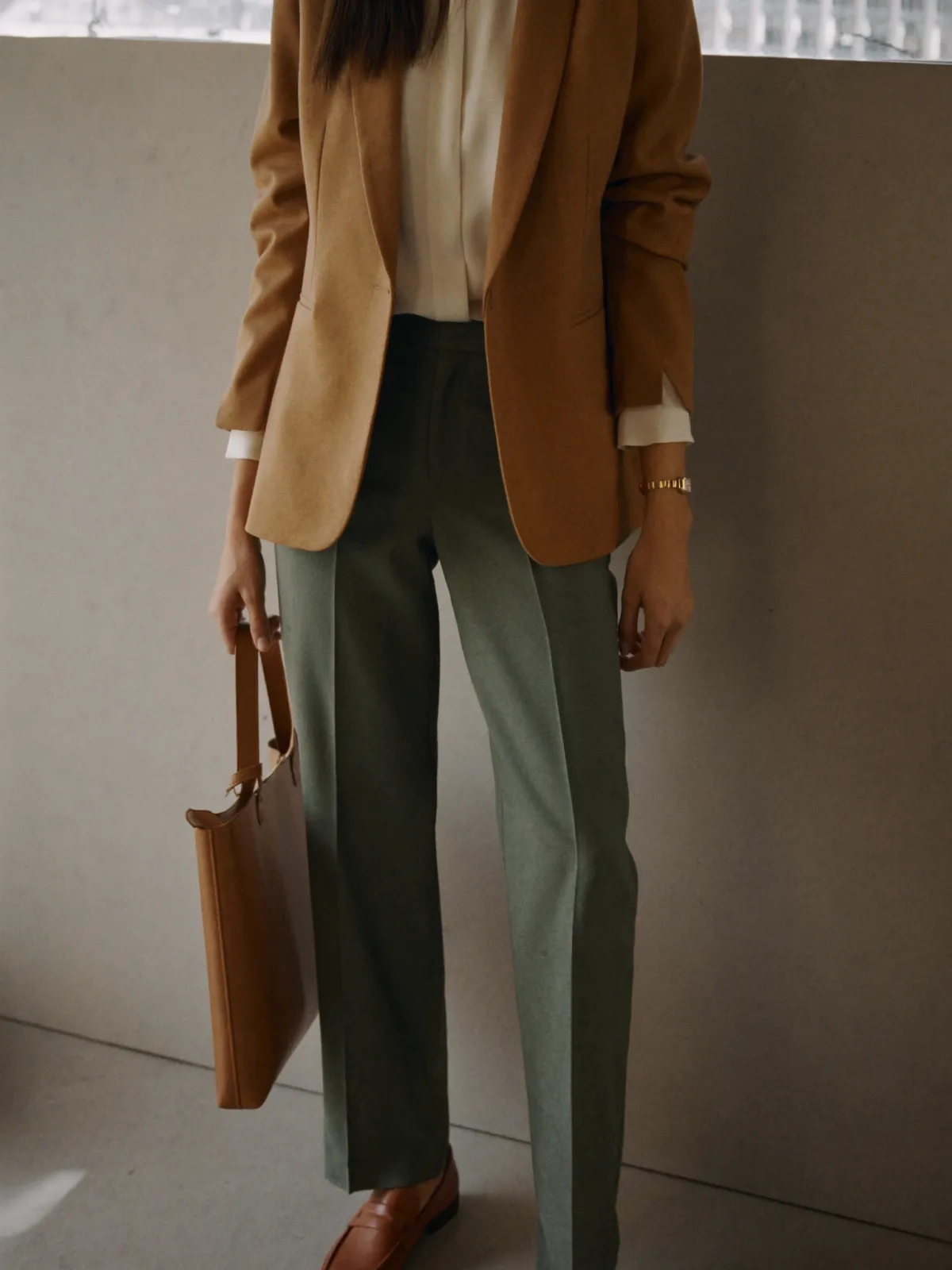
Work
A camel blazer over a cream silk blouse, olive straight trousers and cognac loafers, with brushed gold jewelry.
Weekend
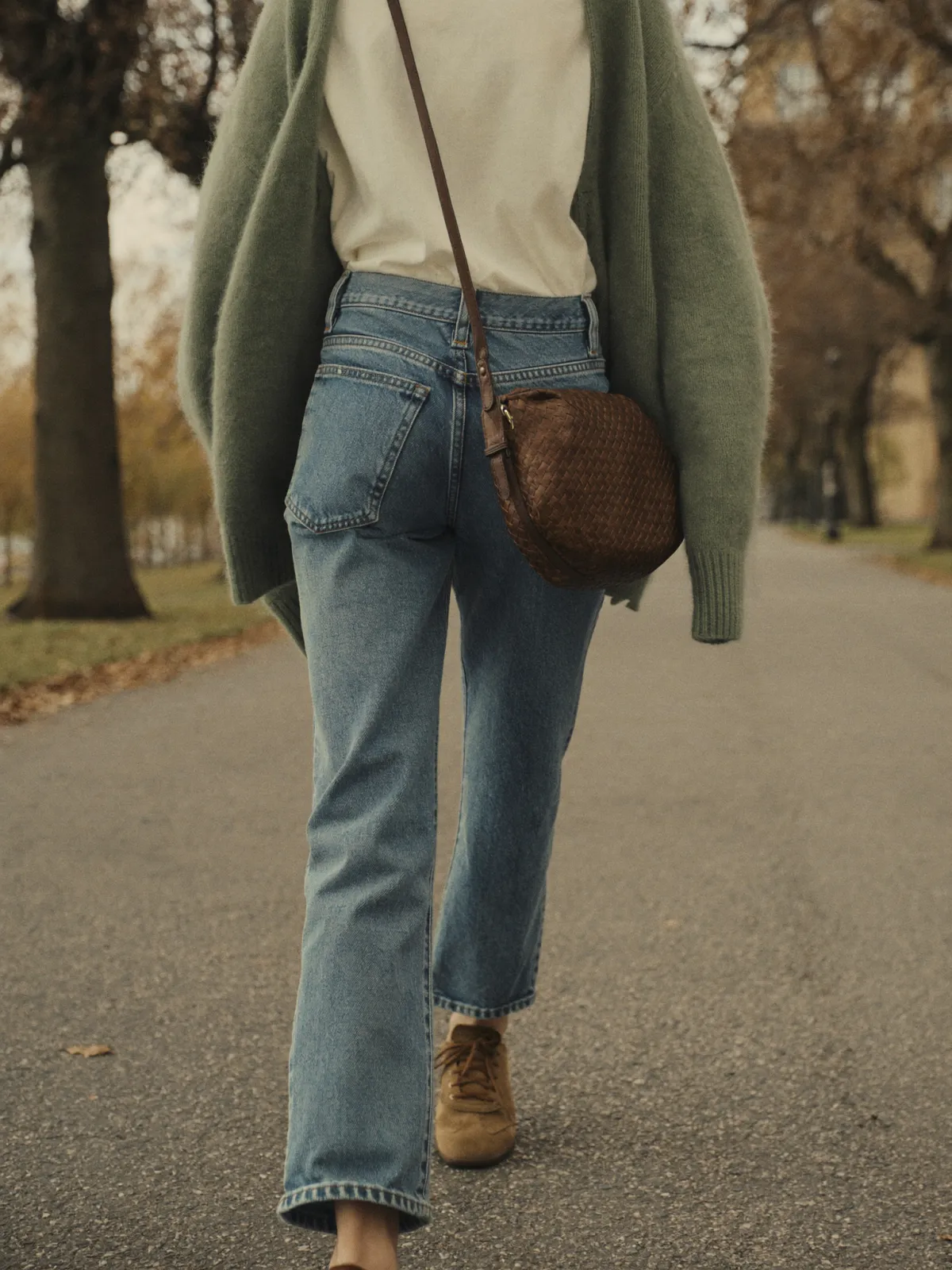
A sage knit cardigan over a cream t-shirt, mid-wash jeans, tan suede sneakers and a woven brown bag.
Cold weather
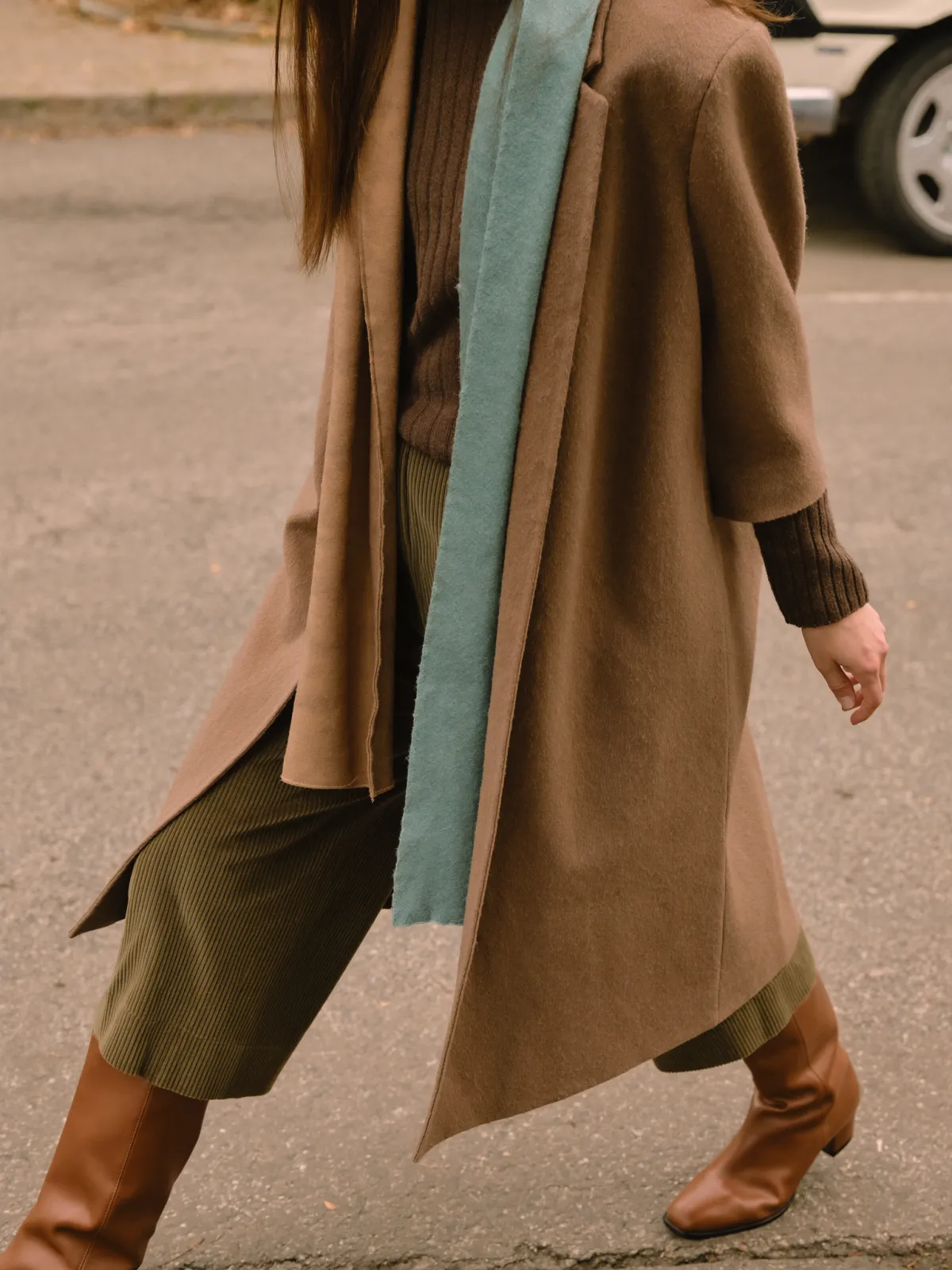
A long warm-brown wool coat, a coffee turtleneck, a soft teal scarf, olive trousers and cognac knee-high boots.
Evening
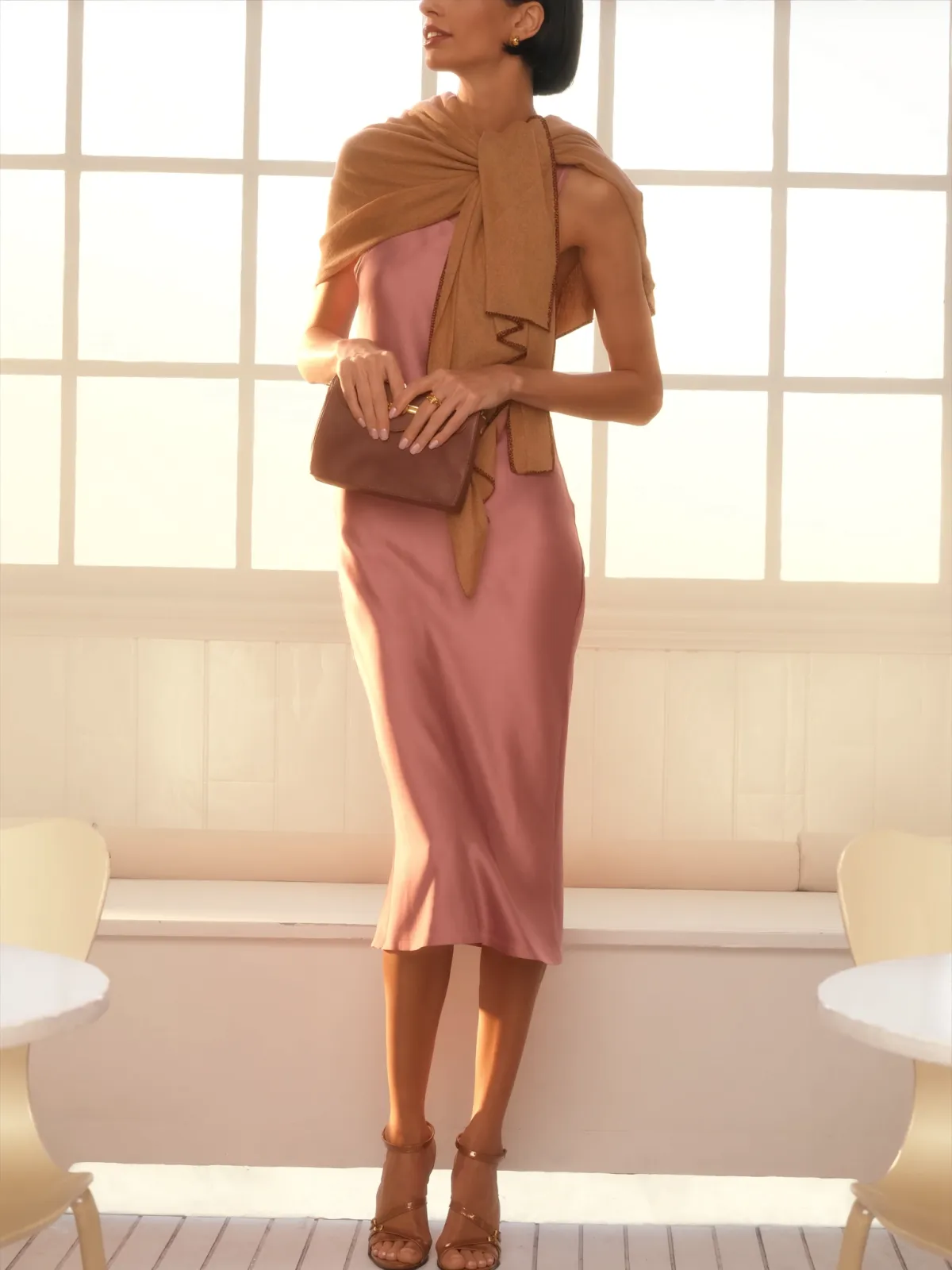
A dusty rose satin slip dress with a camel wrap, bronze sandals and small brushed gold earrings.
A Soft Autumn capsule wardrobe
Twelve pieces in palette colors. The five tops and four bottoms make 20 top-and-bottom combinations, each worn with the loafers; the coat and the tote go with all of them.
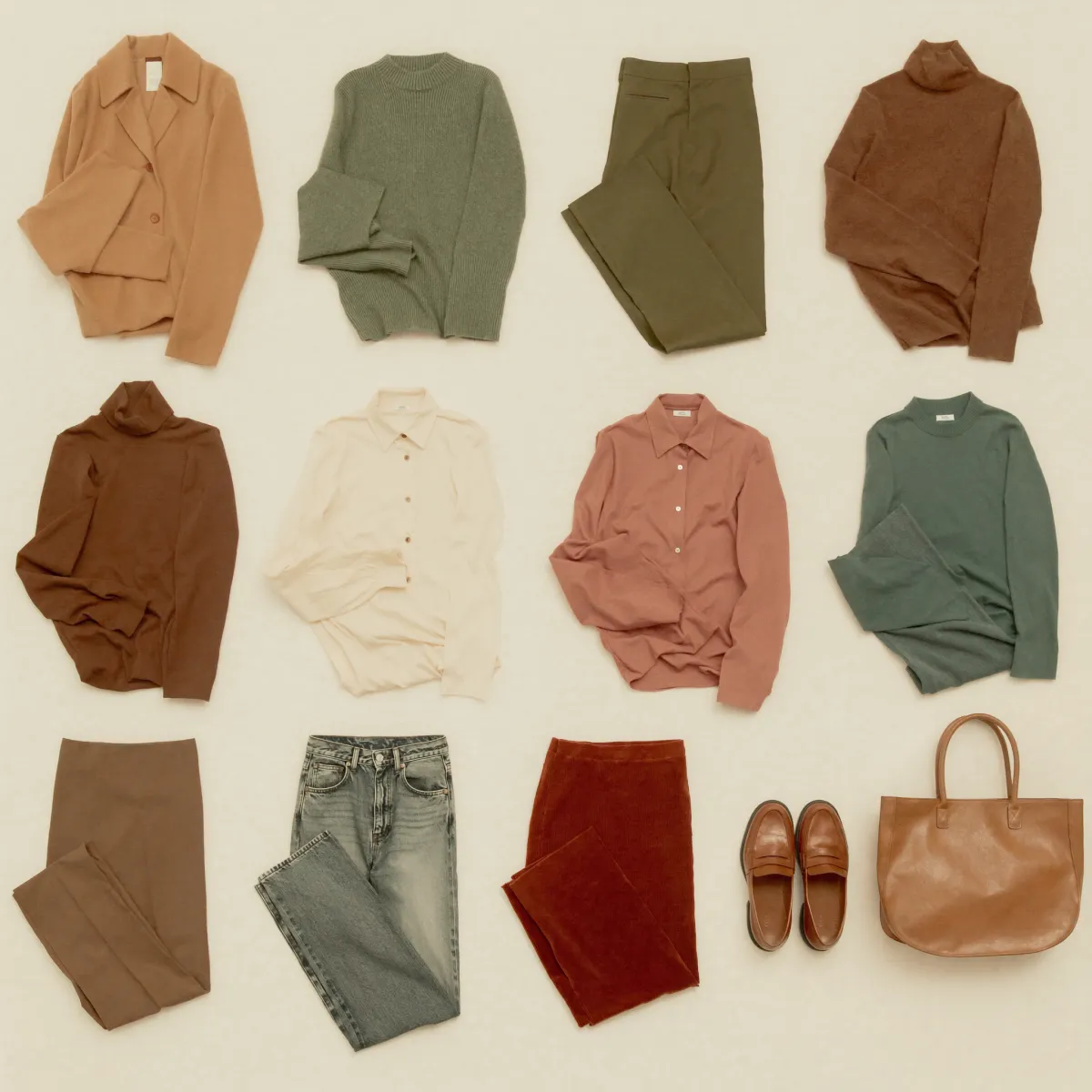
- Wool coat, camel
- Tailored trousers, olive
- Silk blouse, cream
- Knit sweater, sage
- Turtleneck, coffee
- Fine-knit sweater, soft teal
- Shirt, dusty rose
- Midi skirt, mushroom
- Straight jeans, warm denim
- Corduroy skirt, soft brick
- Loafers, camel
- Leather tote, honey
Prints and fabrics
Blended, low-contrast prints sit closest to the palette: soft florals, paisley, tweed, heather knits and watercolor patterns. Crisp black-and-white stripes and large high-contrast graphics add more contrast than the palette has. Matte and textured fabrics such as suede, brushed wool, cashmere, linen, corduroy and washed silk also soften how a color looks.
Am I a Soft Autumn? How to tell
A season describes how your overall coloring works with color: its depth, how warm or cool it leans, and how soft or clear it looks. It is not tied to one skin depth, ethnicity, eye color or hair color. People with fair, medium and deep skin can all be Soft Autumn.
Skin depth and undertone are different things. Depth is how light or dark the skin is. Undertone is whether it leans golden, pink or neutral. Two people with the same depth can have different undertones, and the same undertone appears at every depth.
Skin
Any depth, from fair to deep, often with a neutral-to-golden undertone and an even, soft look rather than a strongly pink or strongly golden one.
Eyes
Often soft or mixed colors: hazel, green-brown, olive, warm grey-green, or soft medium-to-dark brown. A soft look matters more than a particular color.
Hair
Often dark blonde to medium or soft dark brown, sometimes soft auburn, with a blended look. Dyed or grey hair changes the picture, so look at roots, brows and older photos too.
Contrast
Usually low to medium, judged against your own skin depth: hair, skin and eyes sit close together rather than standing apart.
A side-by-side comparison
Use clothes or fabrics you already own. Sit by a window in daylight, with no makeup or a light base and your hair pulled back. Compare one pair at a time, and change nothing else between them.
- Temperature: camel or oatmeal against a cool grey-blue.
- Chroma: a muted color (sage or dusty rose) against a saturated one (kelly green or fuchsia).
- Depth: a medium color (taupe) against a very dark one (black) and a very light one (optic white).
For each pair, note which one makes your skin look more even and your features more balanced. Taking photos in the same light, or asking a friend, helps.
If warm, muted and medium win most of the time, Soft Autumn is a reasonable starting point. If muted wins but the cool color looks better, look at Soft Summer. If warm wins and saturated colors also look good, look at True Autumn. Mixed results are common: many people sit near a border between seasons.
Two quick tests are weaker than they seem. Jewelry: many people look fine in both gold and silver, and the finish often matters more than the metal. Selfies: phone cameras adjust white balance and smooth skin, so a photo can shift warmth and contrast. Wearton's selfie analysis is a starting point too; check it against real clothes in daylight.
Soft Autumn vs similar seasons
Soft Autumn shares borders with several seasons, which is why people are often unsure. The table compares it with its two neighbors and two seasons it is often confused with.
| Quality | Soft Autumn | Soft Summer | True Autumn | Deep Autumn | Light Spring |
|---|---|---|---|---|---|
| Hue | Warm-neutral | Cool-neutral | Warm | Warm-neutral | Warm |
| Chroma | Muted | Most muted | Medium, earthy | Medium to rich | Clear |
| Value | Light to medium | Light to medium | Medium | Medium to deep | Light |
| Contrast | Low to medium | Low | Medium | Medium to high | Low |
| Harder to wear | Black, neon | Orange, gold | Pastels, grey | Pastels | Dark, heavy colors |
| Sample colors |
This follows the 12-season system. Names differ between systems: some call True Autumn "Warm Autumn", Deep Autumn is also called Dark Autumn, and 16- or 17-season systems split the seasons further.
Soft Autumn vs Soft Summer
Both are muted and low in contrast, so these two are the most often confused. The difference is temperature. Soft Autumn leans warm: camel, olive, terracotta, gold. Soft Summer leans cool: dusty blue, rose-grey, cool taupe, silver.
Compare a camel scarf and a cool grey-blue scarf in daylight. If camel makes your skin look more even, Soft Autumn is more likely; if the grey-blue does, Soft Summer is more likely. Many people sit close to this border, and both palettes share colors.
Soft Autumn vs True Autumn
Both are warm, but True Autumn is richer and more saturated: pumpkin, rust, deep olive and true gold at full strength. If those colors look strong on you and you prefer them a step softer, Soft Autumn is more likely.
Best hair colors for Soft Autumn
Hair color does not decide your season, and you can wear any hair color you like. If you want a color that blends with the Soft Autumn palette, warm, soft shades close to your natural depth are the easiest. Ashy platinum, blue-black and bright copper add more contrast or saturation than the rest of the palette.
Can Soft Autumns have dark hair? Yes. Medium and soft dark brown hair are common. Very dark hair with strong contrast to the skin points more to Deep Autumn, but contrast is judged against your own skin depth. Red hair works too in softer versions such as soft copper or strawberry blonde; bright red is more saturated than the palette. For greying hair, warm, blended shades usually sit closer to the palette than stark, cool white.
Soft Autumn makeup
Soft Autumn makeup follows the same idea as the clothes: warm-leaning, soft and blended. The swatches are examples, not one shade for everyone. Choose the depth that matches your skin: a shade that looks soft on fair skin can disappear on deep skin, and a deep shade can look heavy on fair skin.
Lipstick
Fair to light skin: rosy nude, soft rosewood. Medium skin: rosewood, terracotta, brick rose. Deep skin: deep rosewood, brick and warm brown-berry. For a bold lip, a muted brick red works across depths.
Blush
Fair to light skin: soft peach, dusty rose. Medium skin: apricot, warm rose. Deep skin: terracotta, deep apricot, warm berry. Blend it well so it looks like a soft flush.
Eyeshadow and eyeliner
Taupe, bronze, khaki and olive work across depths; deeper versions such as espresso and deep bronze show better on deep skin. Brown, olive or bronze eyeliner and brown-black mascara look softer than jet black, but black mascara is fine if you prefer it.
Nails
A warm nude matched to your skin depth, mushroom, terracotta, olive or soft teal. A milky cream is softer than optic white.
Jewelry and metals for Soft Autumn
Many Soft Autumns find warm metals easiest: brushed gold, bronze, rose gold and antique brass. Brushed and matte finishes sit closer to the palette than mirror shine, and this applies to silver too. Stones in palette colors include amber, smoky quartz, jade, turquoise, tiger's eye and cream freshwater pearls.
Soft Autumn celebrities
Celebrity seasons are opinions from photos, not facts: lighting, makeup, hair dye and editing change how someone looks, and analysts often disagree. These names often appear on published Soft Autumn lists.
- Drew Barrymore
- Gisele Bündchen
- Gigi Hadid
- Jennifer Anistonalso often typed as Soft Summer
- Adele
- Elizabeth Olsen
Published lists also include Thandiwe Newton, Tyra Banks and Rihanna: Soft Autumn is not limited to one skin depth.
Soft Autumn for men
The same palette works for men. Suits and trousers in camel, taupe, coffee, olive and warm denim give the same effect as black and navy with less contrast. For shirts: cream, oatmeal, sage, duck egg and dusty rose. Brown leather, a brushed gold or bronze watch and knitwear in moss or soft teal complete the palette.
When does autumn start and end?
Soft Autumn is a color season, not a time of year. You can wear the palette in any month. Its colors do look like a muted autumn landscape: dry grass, olive leaves, faded rust. So it helps to know when autumn itself starts where you live.
The answer depends on the hemisphere, and on which of two definitions your country uses.
Meteorological autumn
Three whole calendar months, used for weather records: 1 September to 30 November in the Northern Hemisphere, 1 March to 31 May in the Southern Hemisphere.
Astronomical autumn
From the equinox to the solstice. The dates move by a day from year to year, and the day can differ by time zone.
| Astronomical autumn | Starts (equinox) | Ends (solstice) |
|---|---|---|
| Northern Hemisphere, 2026 | 22 or 23 September 2026 | 21 or 22 December 2026 |
| Southern Hemisphere, 2027 | 20 or 21 March 2027 | 21 or 22 June 2027 |
| Northern Hemisphere, 2027 | 22 or 23 September 2027 | 21 or 22 December 2027 |
Where two days are given, the day depends on your time zone: the Americas usually get the earlier one, East Asia and Oceania the later one.
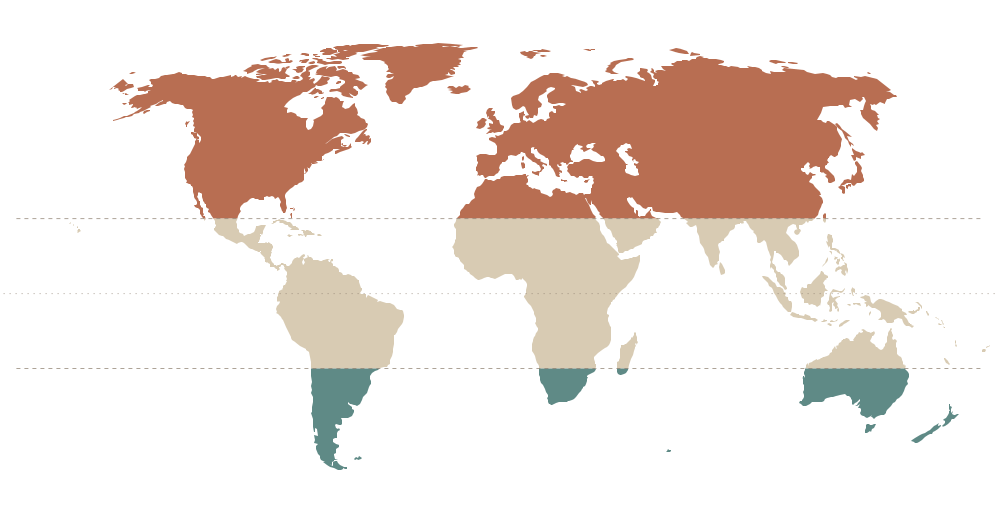
| Country or region | Autumn starts | Autumn ends |
|---|---|---|
| United States, Canada | At the September equinox on most calendars; weather services count from 1 September | At the December solstice, or on 30 November |
| United Kingdom | 1 September for the Met Office; many people use the September equinox | 30 November, or the December solstice |
| Ireland | 1 September for Met Éireann; 1 August in the traditional Irish calendar | 30 November; 31 October in the traditional calendar |
| Most of continental Europe | Two dates are in use: 1 September (weather services) and the September equinox (calendars) | 30 November, or the December solstice |
| Russia, Ukraine, Belarus | 1 September | 30 November |
| Sweden | The first of five days in a row with a daily mean temperature below 10 °C (SMHI). In the mountains of the north this can be in August, in the far south in October | When the daily mean temperature stays below 0 °C and winter starts |
| Finland | When the daily mean temperature falls below 10 °C for good: often in August in Lapland, in September in the south | When it falls below 0 °C for good |
| China | Weather services: when the five-day mean temperature falls below 22 °C, so the north gets autumn weeks before the south. Traditional calendar: Start of Autumn (Liqiu), 7 or 8 August | When the five-day mean falls below 10 °C. Traditional calendar: Start of Winter (Lidong), 7 or 8 November |
| Japan, South Korea | 1 September for weather services. Japan's traditional calendar starts autumn at Risshū, 7 or 8 August | 30 November |
| India | Sharad, the autumn of the Hindu calendar, starts in about mid-September. Weather services count a post-monsoon season from October | Sharad ends in about mid-November; the post-monsoon season in December |
| Australia, New Zealand, South Africa | 1 March | 31 May |
| Brazil, Argentina, Chile | At the March equinox (20 or 21 March) | At the June solstice (20 or 21 June) |
| Tropics: Nigeria, Indonesia, Thailand, Singapore, southern Vietnam | No autumn: the year has a wet and a dry season instead | No autumn |
Soft Autumn colors work in every season. In a warm place or a hot month, wear the same colors in linen, cotton and light knits.
Common Soft Autumn mistakes
Most of these come from following the season too literally, or from judging color in the wrong light.
- 1
Choosing autumn colors at full strength
Rust, pumpkin and bright mustard are True Autumn colors. Soft Autumn takes the same ideas one step softer.
Instead: Terracotta, Apricot, Honey
- 2
Swapping black for very dark navy
Inky navy keeps almost the same contrast as black. Dark anchors from the palette are warmer and softer.
Instead: Coffee, Petrol, Muted pine
- 3
Going too pale
Optic white and icy pastels are brighter and cooler than the palette. Its light colors have a little warmth in them.
Instead: Cream, Oatmeal, Duck egg
- 4
Pairing very light with very dark
Black with white, or navy with white, adds more contrast than Soft Autumn coloring usually has. Pair colors that are close in depth.
Instead: Camel, Cream, Taupe
- 5
Shiny finishes everywhere
Mirror-shiny metal and high-gloss fabric make a color look stronger. Matte and brushed finishes make the same color softer.
Instead: Honey, Camel
- 6
Judging color on a screen
Screens, shop lights and photos shift color. Check a piece in daylight, next to your face, before you decide.
Instead: Mushroom, Sage
- 7
Deciding the season from one test
One selfie, one draping test or one celebrity comparison is a starting point. Compare several colors side by side and look for a pattern.
Instead: Camel, Soft teal
- 8
Throwing out the clothes you love
A favorite in another color can stay. Wear it away from your face, or put a palette color between it and your face.
Instead: Cream, Camel
Quiz: is it Soft Autumn?
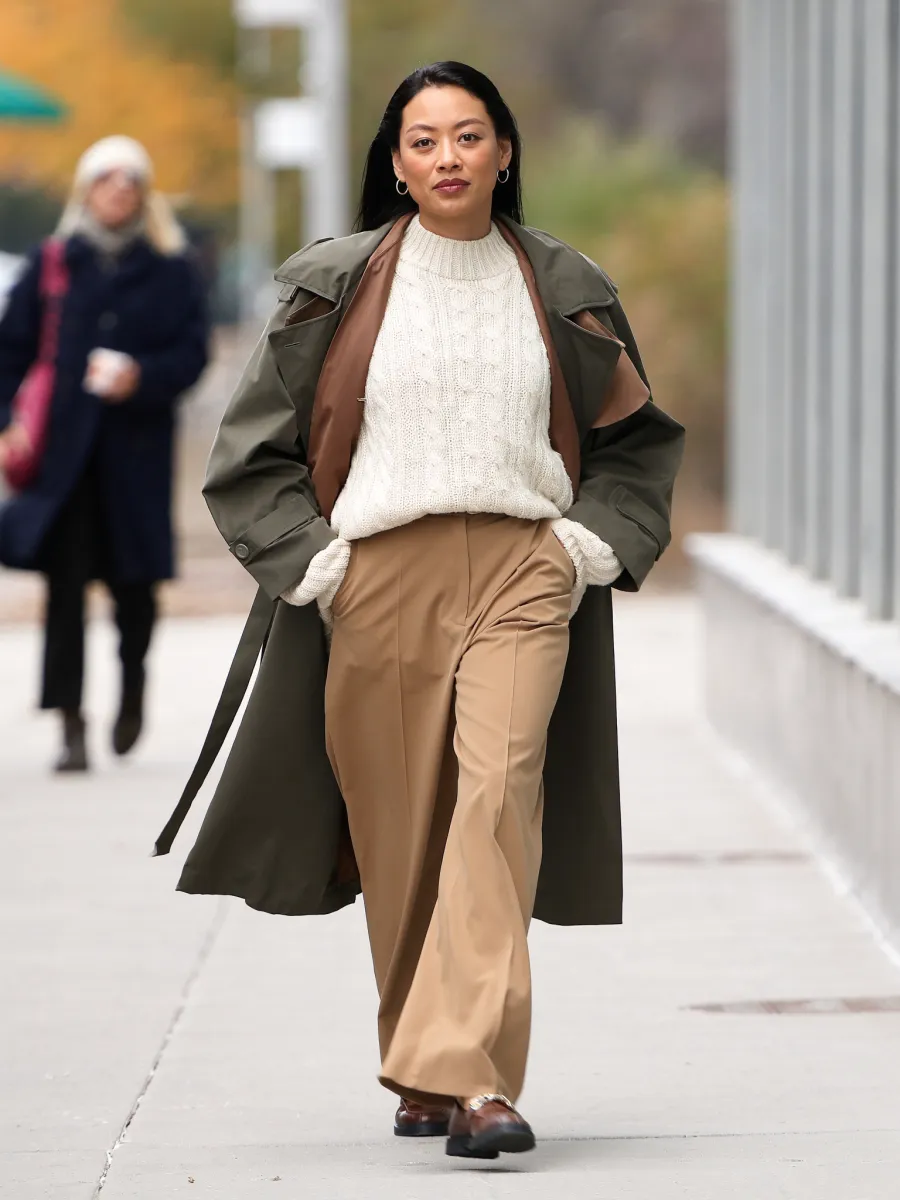
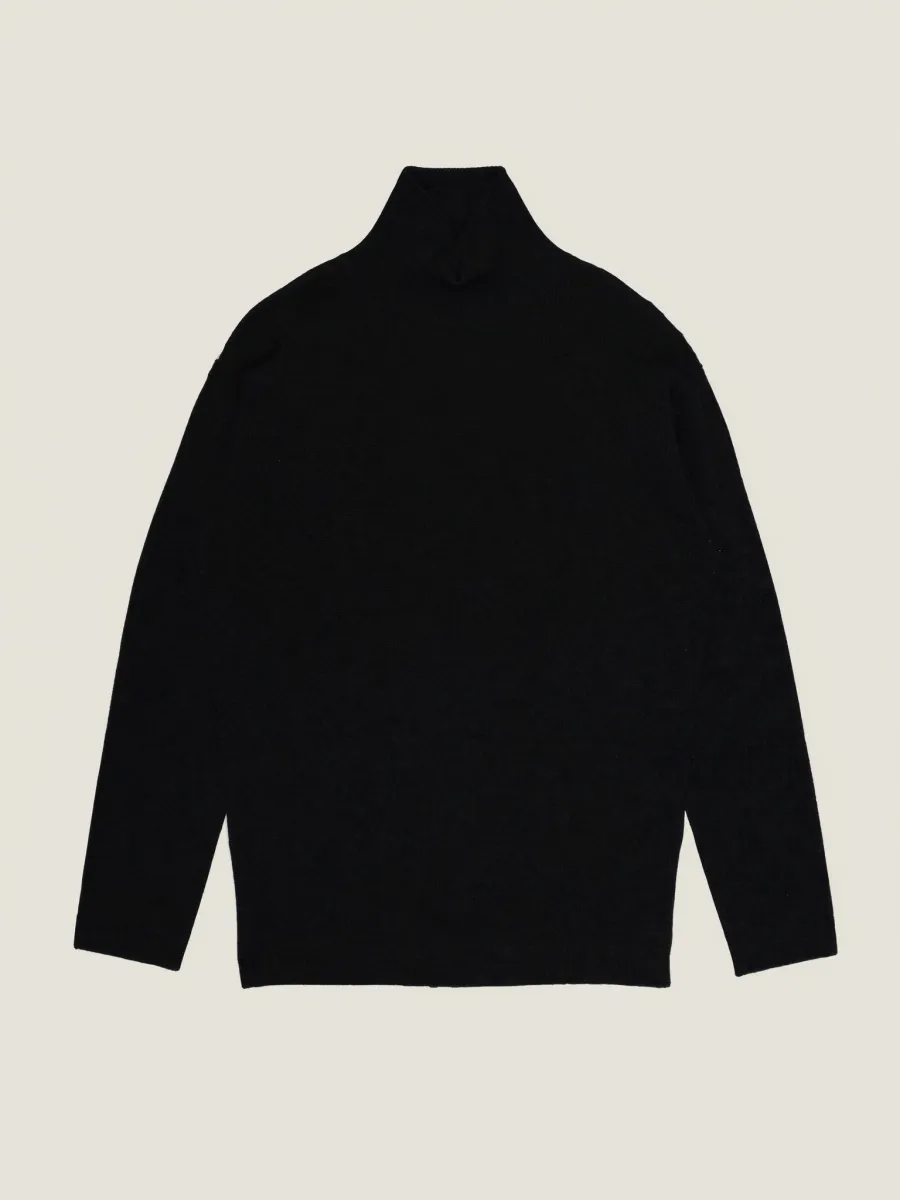
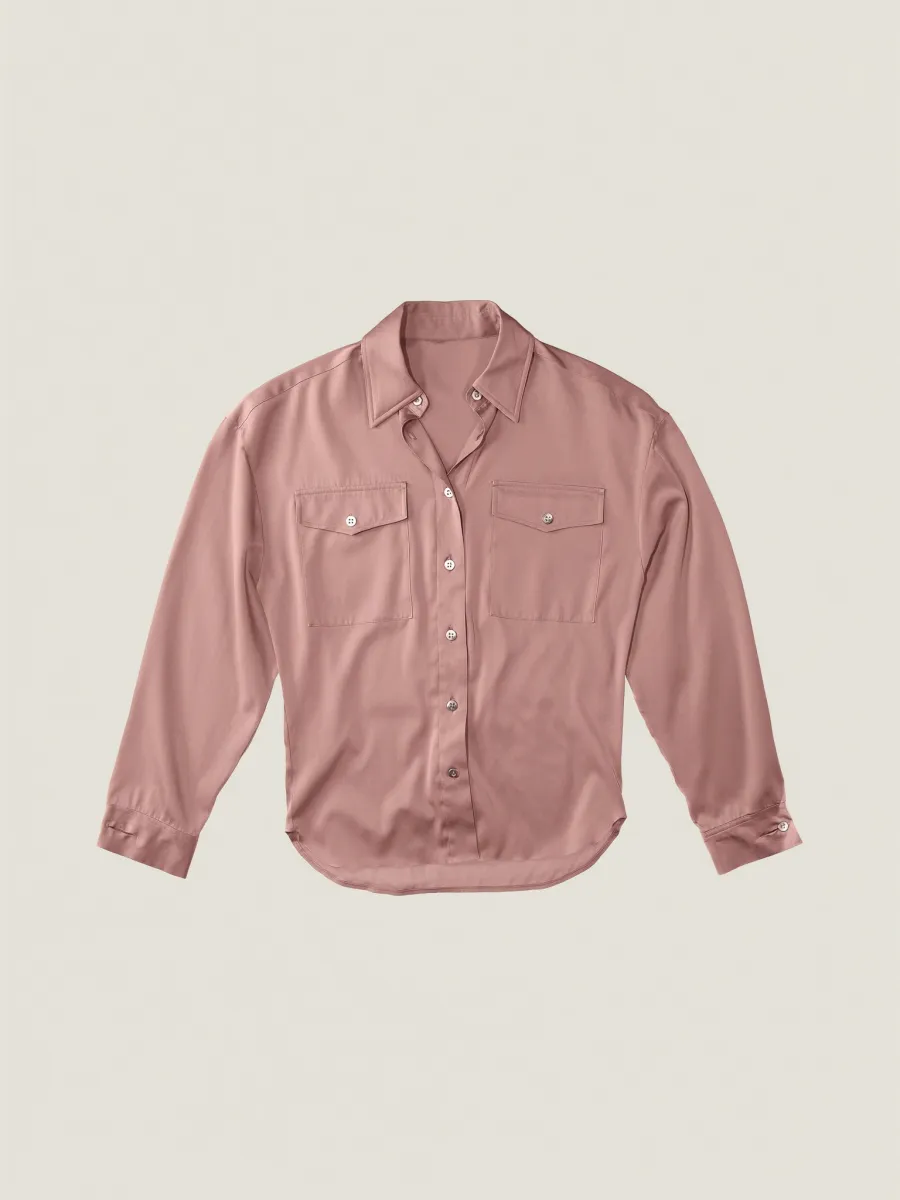
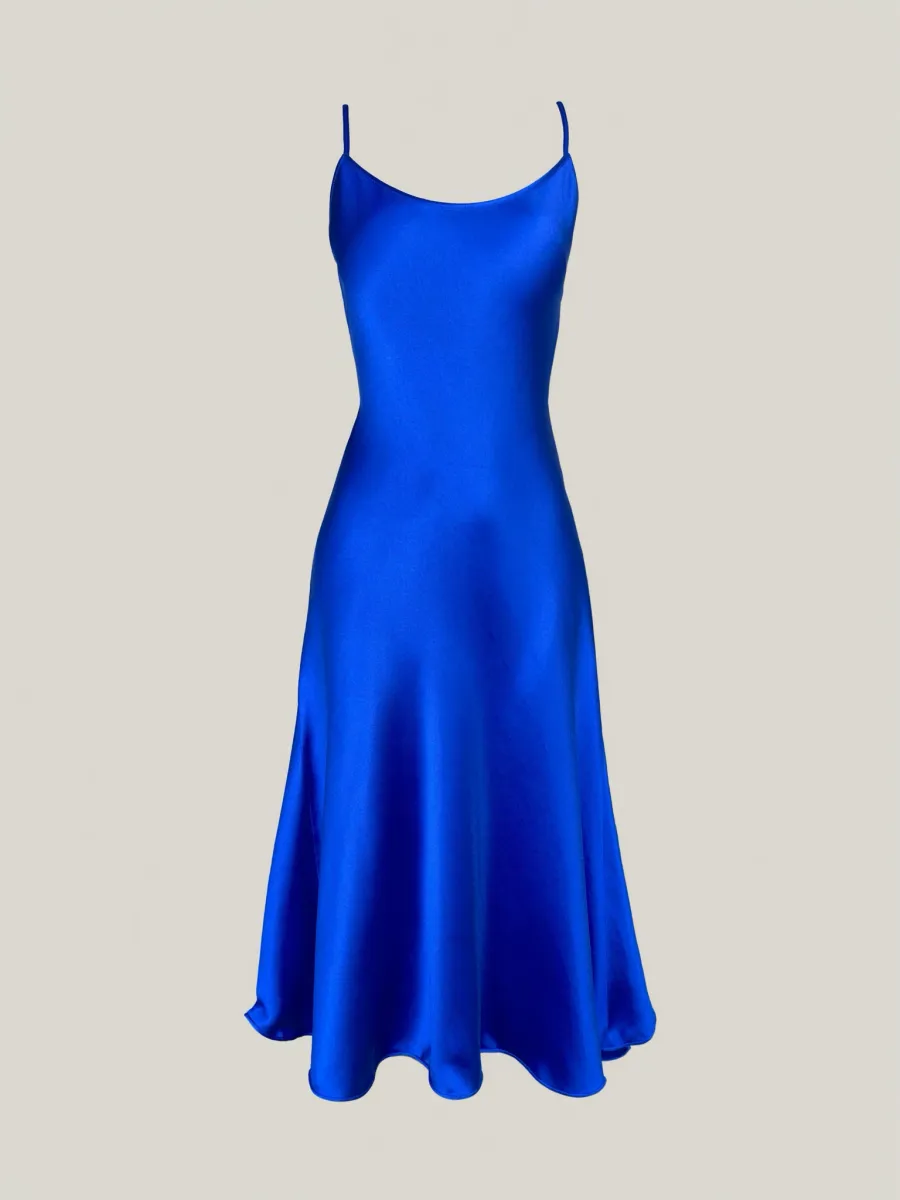
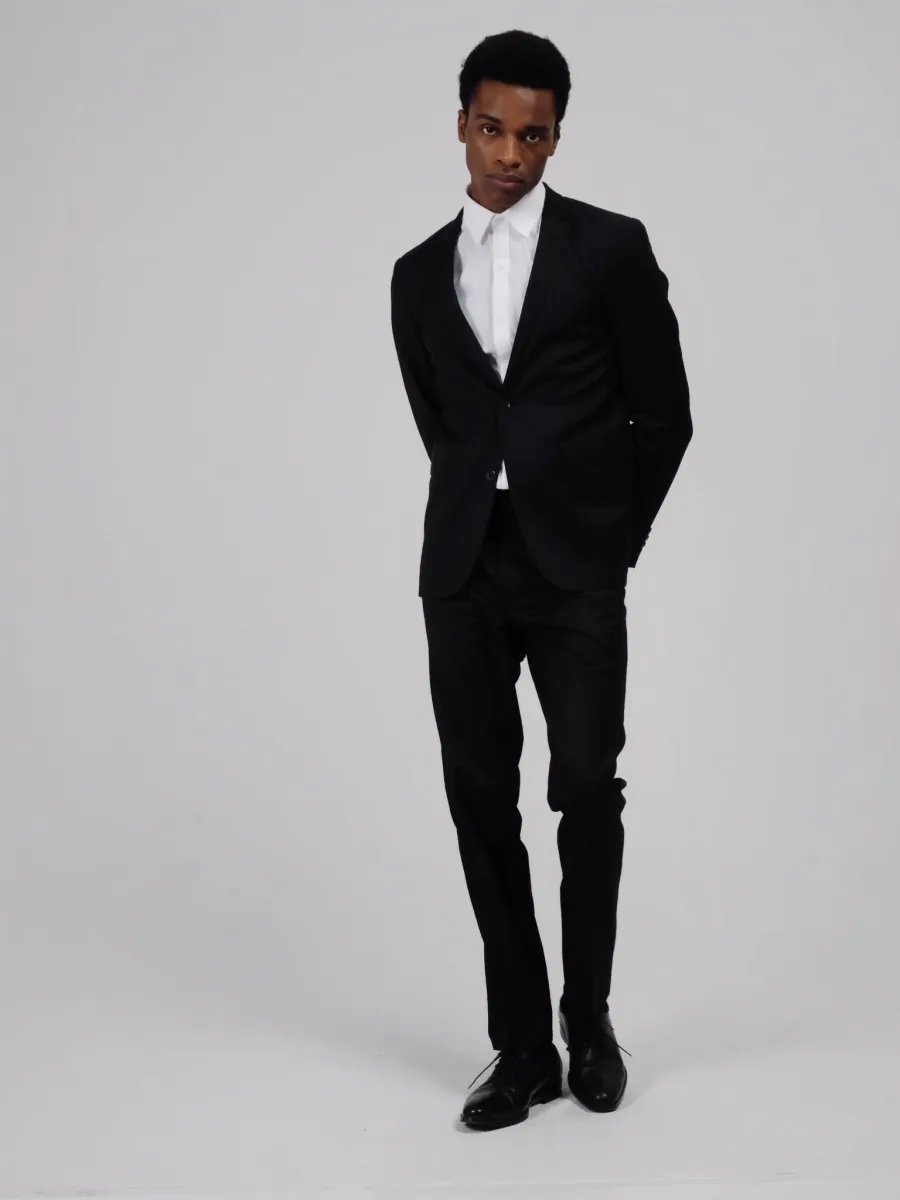
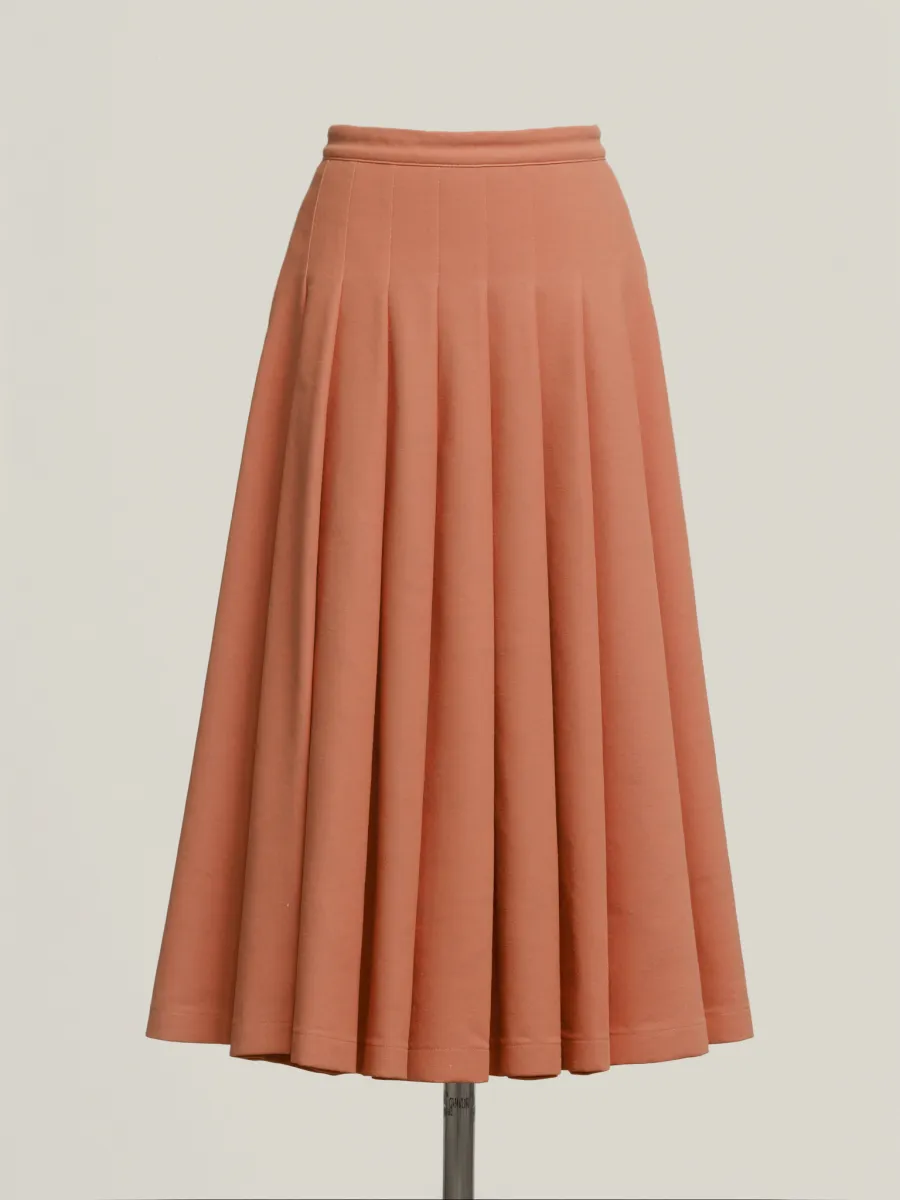
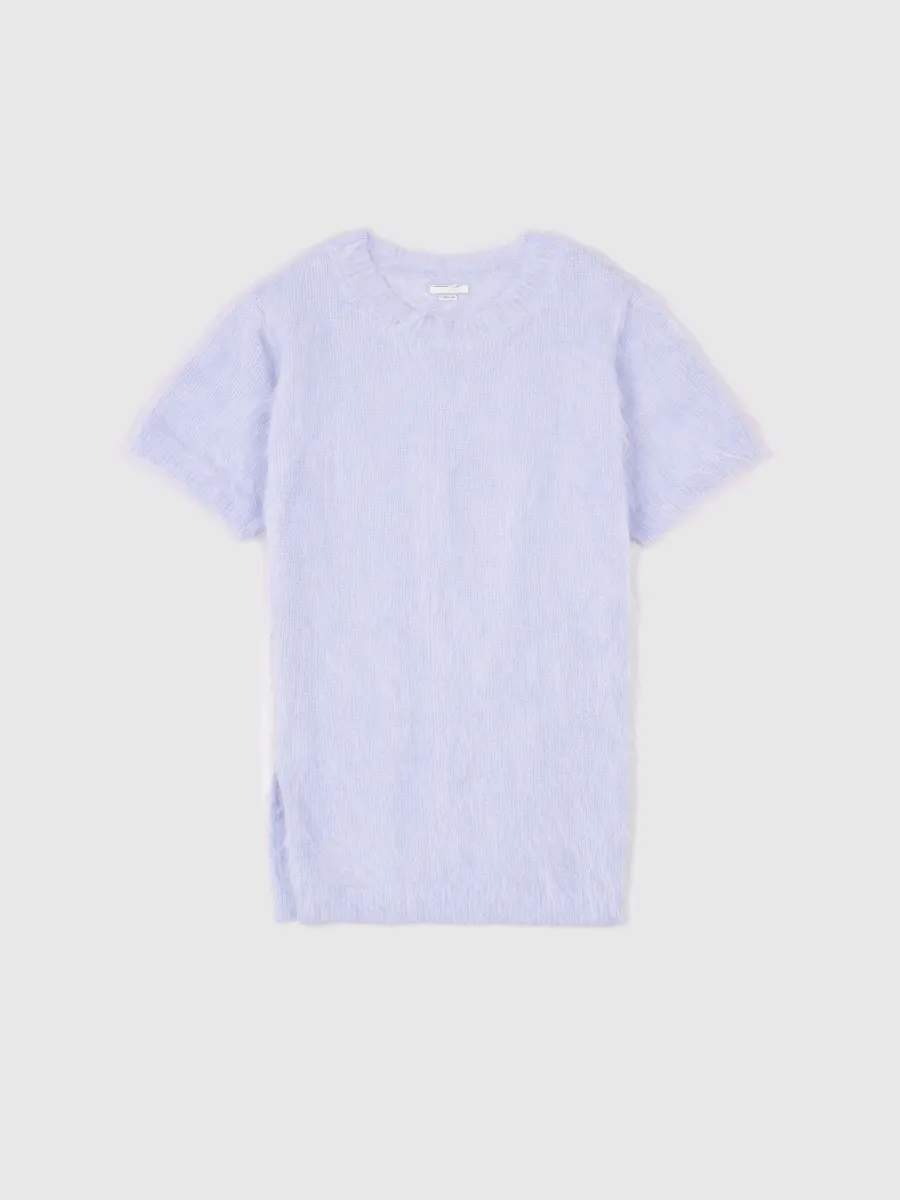
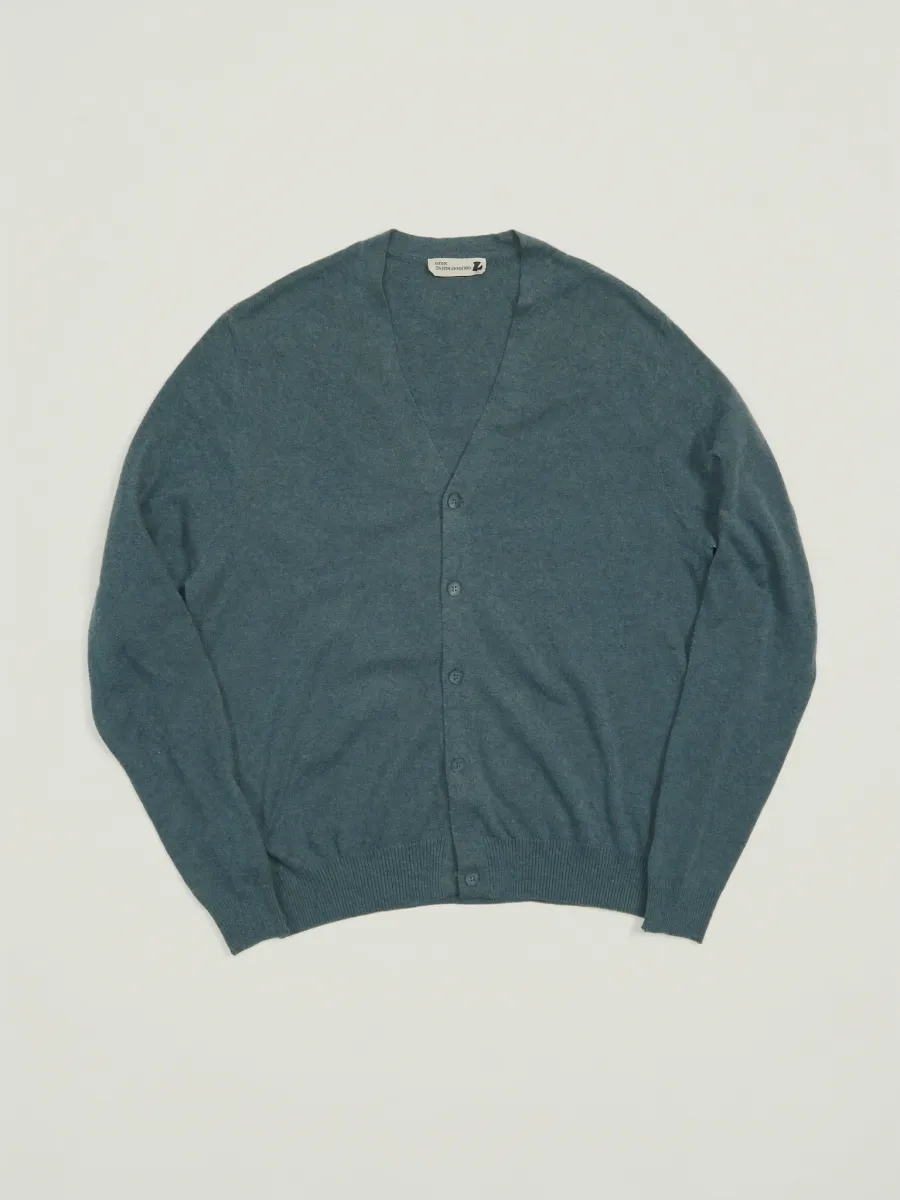
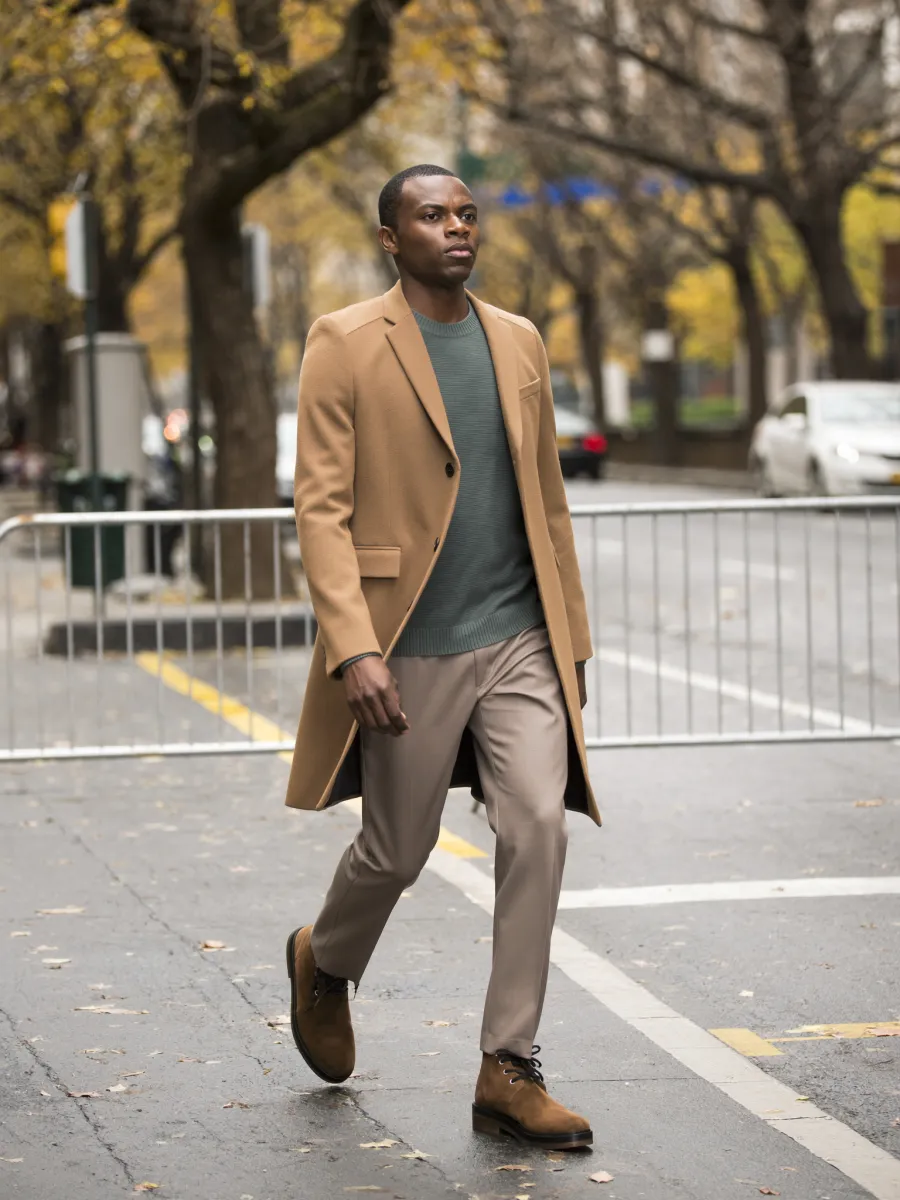
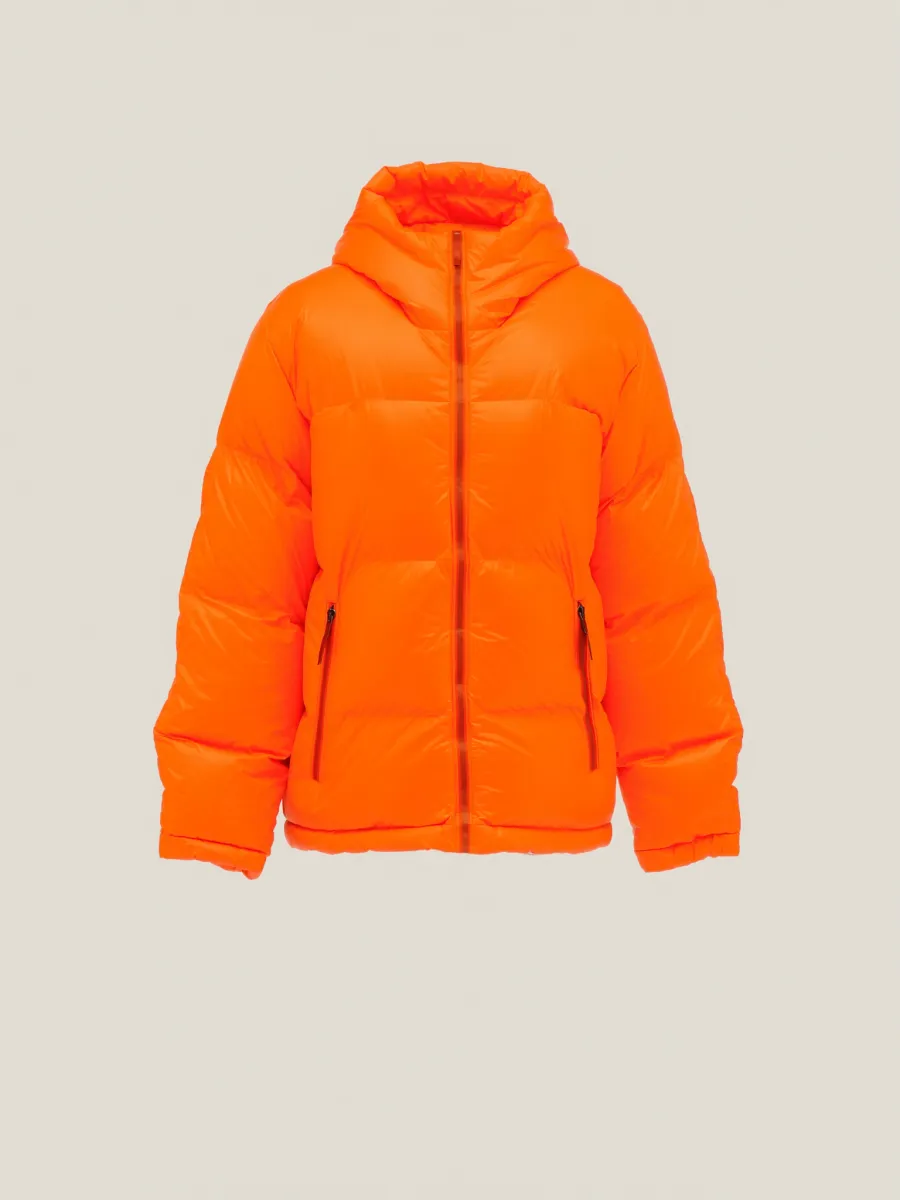
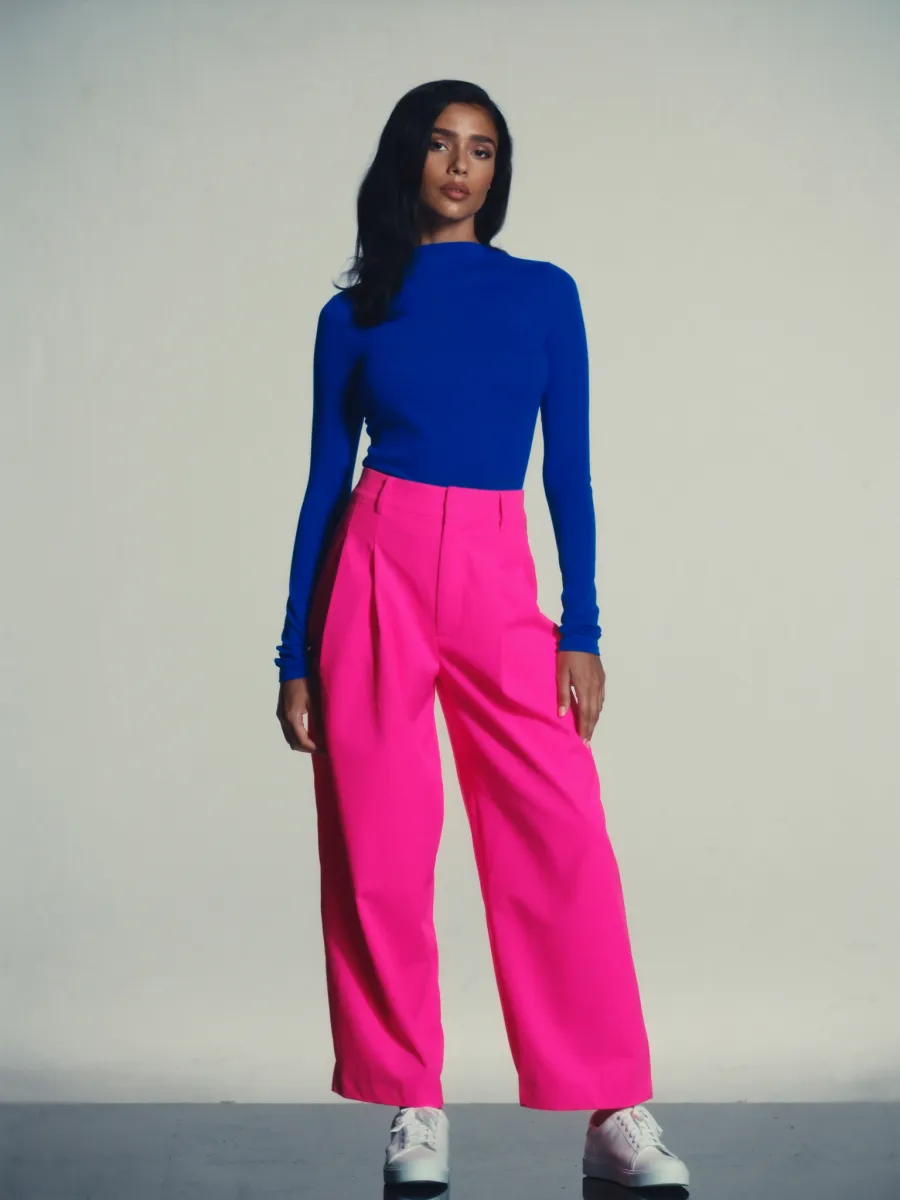
Fourteen photos, one question each. Tap Yes if the color belongs to the Soft Autumn palette, No if it does not. Hooky keeps score.
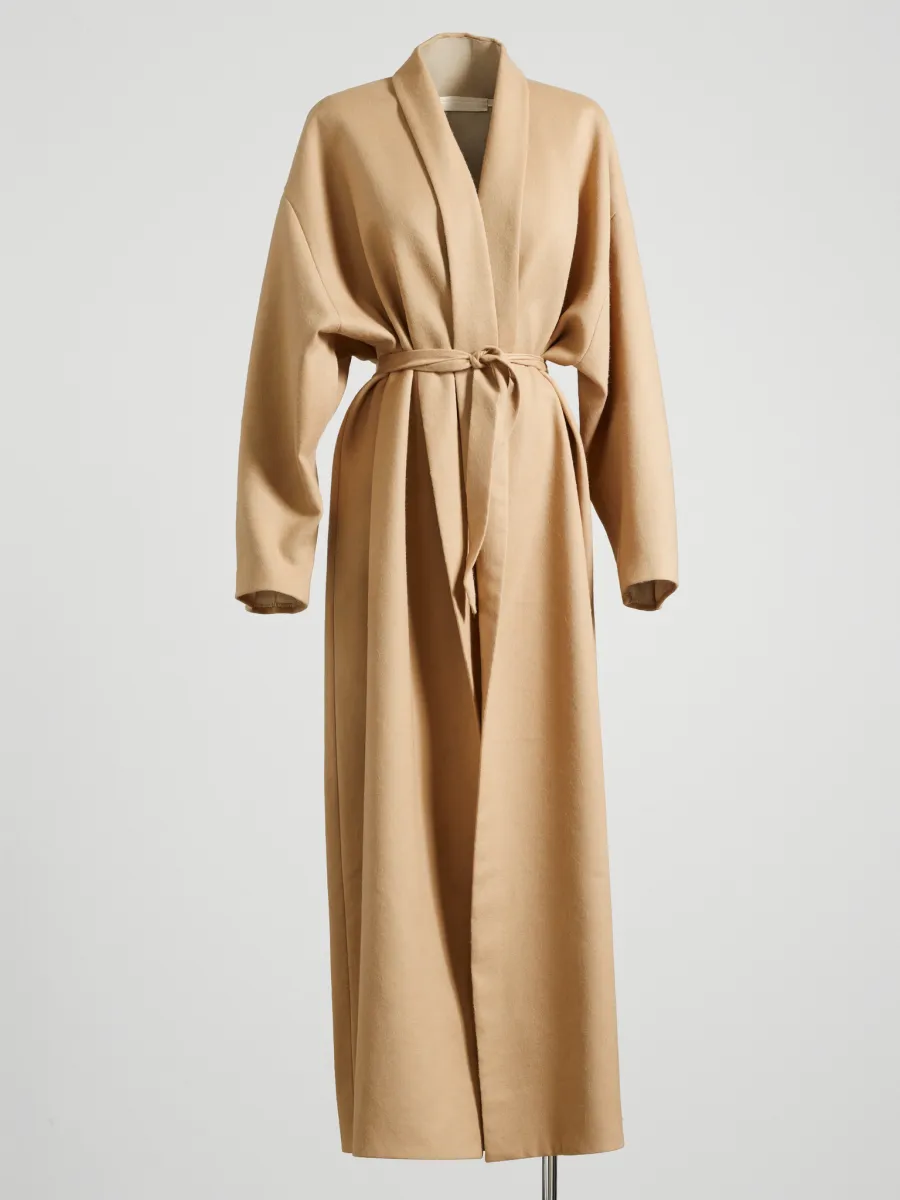
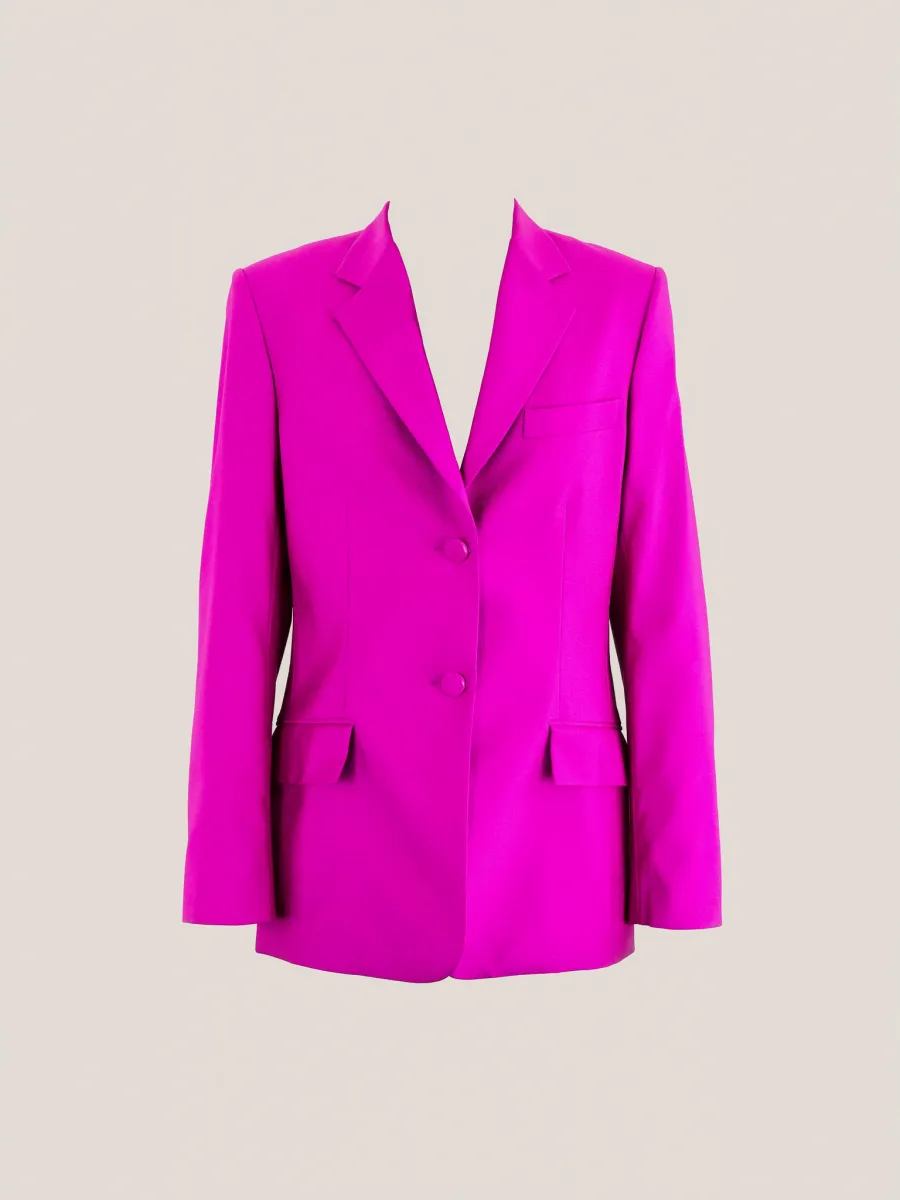
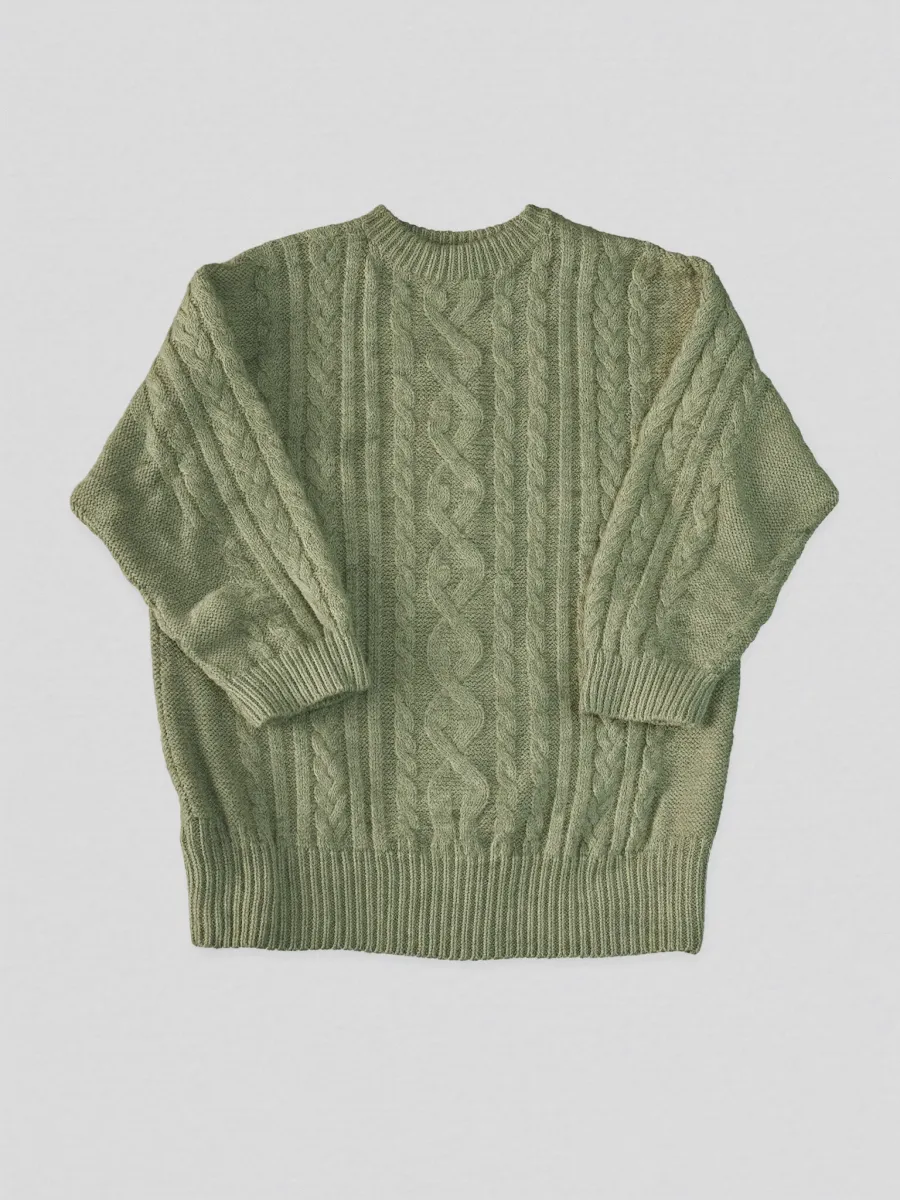
Link copied!
Soft Autumn FAQ
Is Soft Autumn warm or cool?
Warm-neutral. Its main quality is softness (low chroma); warmth comes second. It leans warmer than Soft Summer but less than True Autumn.
Is Soft Autumn gold or silver?
Usually gold-leaning: brushed gold, bronze and rose gold are the easiest. Brushed or matte silver also works for many Soft Autumns, because the finish often matters more than the metal.
Is Soft Autumn the same as Muted Autumn or Warm Autumn?
Muted Autumn is another name for Soft Autumn. Warm Autumn is not: in the 12-season system it is another name for True Autumn, which is warmer and richer. Names differ between systems, so check which one a guide uses.
What should Soft Autumn wear?
Warm-leaning, muted, light-to-medium colors such as camel, cream, taupe, sage, olive, soft teal, dusty rose, terracotta and mustard, combined with little contrast. Matte and textured fabrics and soft-finish metals fit the palette.
Can a Soft Autumn have blue eyes?
Yes, though it is less common. Soft Autumn blue eyes are usually a soft grey-blue or teal-blue, often with green or golden flecks.
How do I know if I am a Soft Summer instead?
Both are muted; the difference is temperature. Compare a camel scarf and a cool grey-blue scarf in daylight. If the grey-blue looks more even on you, Soft Summer is more likely. Results near the border are common.
What colors should Soft Autumn avoid?
No color is forbidden, but very dark, very saturated or very cool colors are harder to wear: black, optic white, neon, icy pastels and cool jewel tones like fuchsia and royal blue. Coffee, cream, dusty rose and soft teal are softer versions.
How we made this palette: the 12-season system describes each season by hue, chroma and value. We chose 30 reference shades that are warm-neutral, muted and light-to-medium, the same definition the Wearton selfie analysis uses for Soft Autumn. Hex codes are screen references; check colors on fabric in daylight.