
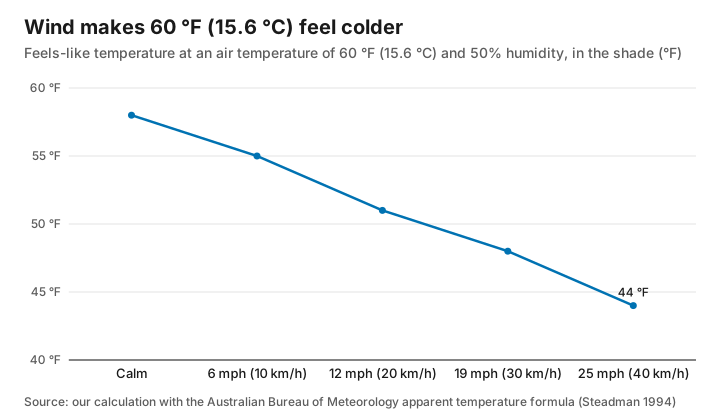
What to wear in 60 degree weather (15.6 °C): a T-shirt or a light long-sleeve top, a layer you can take off, such as a cardigan or an overshirt, then jeans or pants and closed shoes. Check the wind first. By the Australian Bureau of Meteorology’s apparent temperature formula, 60 °F in the shade at 50% humidity feels like about 58 °F (14.5 °C) in calm air. In a 12 mph (20 km/h) wind it feels like about 51 °F (10.6 °C), and a jacket that stops the wind is the better choice.
This guide gives the “feels like” numbers for 60 °F (15.6 °C) in wind and humidity, calculated with a published formula, and one table that turns each kind of 60 degree day into an outfit.
Wind and humidity change how 60 degrees feels
The air temperature is only one part of how warm you feel. Wind takes heat away from your body, and humid air feels warmer than dry air at the same temperature. So two days at 60 °F (15.6 °C) can feel more than 10 degrees (more than 5 °C) apart, as the table below shows.
The two “feels like” measures most people in the US know are made for other temperatures. The US National Weather Service defines wind chill only for temperatures at or below 50 °F (10 °C) and wind above 3 mph (4.8 km/h). The National Weather Service heat index chart begins its lowest warning level at 80 °F (26.7 °C).
For 60 °F (15.6 °C) we used the apparent temperature formula of the Australian Bureau of Meteorology. It comes from a 1994 model by Robert Steadman of an adult walking outdoors in the shade, and it adds the effect of humidity and wind to the air temperature. We used wind speeds of 0, 10, 20, 30 and 40 km/h, measured 10 meters above the ground as the formula needs; the mph values are rounded. These are model estimates: your own comfort can differ with your activity and your clothes. Our results for 60 °F (15.6 °C):
| Wind at 60 °F (15.6 °C) | Dry air (30% humidity) | 50% humidity | Damp air (90% humidity) |
|---|---|---|---|
| Calm | 56 °F (13.3 °C) | 58 °F (14.5 °C) | 62 °F (16.8 °C) |
| Light breeze, 6 mph (10 km/h) | 52 °F (11.4 °C) | 55 °F (12.5 °C) | 59 °F (14.8 °C) |
| Windy, 12 mph (20 km/h) | 49 °F (9.4 °C) | 51 °F (10.6 °C) | 55 °F (12.9 °C) |
| Very windy, 19 mph (30 km/h) | 45 °F (7.5 °C) | 48 °F (8.6 °C) | 52 °F (11.0 °C) |
| Strong wind, 25 mph (40 km/h) | 42 °F (5.5 °C) | 44 °F (6.7 °C) | 48 °F (9.0 °C) |
The numbers are for the shade. In direct sun you feel warmer than the table says. The Bureau’s second formula adds the sun, but it needs a measured value of the sun’s radiation, so this table leaves it out.
What to wear in 60 degree weather, condition by condition
Wearton’s What to wear today tool sorts the “feels like” temperature into three bands. Above 10 °C (50 °F) and up to 18 °C (64 °F) is “mild”: a light layer you can take off, and trousers or jeans. At 10 °C (50 °F) or less it is “cold”: a warm knit and a coat. A windy 60 degree day comes close to that line.
The feels-like values below are for the shade at 50% humidity, unless the row says otherwise.
| Your 60 °F (15.6 °C) day | Feels like, in the shade | What to wear |
|---|---|---|
| Calm and sunny | 58 °F (14.5 °C), warmer in the sun | T-shirt or light long-sleeve top, a cardigan or overshirt to take off, jeans or pants, sneakers or loafers |
| Calm and cloudy | 58 °F (14.5 °C) | Long-sleeve top or thin knit, a light jacket, jeans or pants |
| Light breeze, 6 mph (10 km/h) | 55 °F (12.5 °C) | Long-sleeve top or thin knit, a light jacket you keep on, jeans or pants |
| Windy, 12 mph (20 km/h) | 51 °F (10.6 °C) | A warmer knit and a jacket that stops the wind. Pants rather than a skirt |
| Strong wind, 25 mph (40 km/h) | 44 °F (6.7 °C) | Cold-day clothes: a warm knit, a coat and closed shoes |
| Rain likely | Depends on the wind: see the rows above | A water-resistant jacket or trench coat. Leave suede shoes at home |
| Calm and damp, 90% humidity | 62 °F (16.8 °C) | Breathable layers such as cotton, and a lighter top layer |
Wearton’s tool uses the same lines for wind and rain. At 20 km/h (12 mph) of wind or more, it says that skirts will fly and to wear trousers. When the chance of rain is 40% or more, it says to leave the suede at home.
For a sunny 60 degree day, check the UV index too. For a UV index of 3 to 7, the US Environmental Protection Agency advises broad-spectrum sunscreen of SPF 15 or higher, protective clothing, a wide-brimmed hat and sunglasses, and shade from late morning to mid-afternoon.
If you know your color season, pick the light layer from your palette. For example, the Soft Autumn color palette lists 30 shades with hex codes.
How to layer for a 60 degree day
If 60 °F (15.6 °C) is the day’s high, the morning and the evening of the same day can be cooler. Check the hourly forecast for the hours you will be outside, and dress for those hours. Layers let you follow the changes from morning to afternoon, and from sun to shade.
- Start with a T-shirt or a light long-sleeve top in a breathable fabric such as cotton.
- Add a layer you can take off and carry: a cardigan, a thin knit or an overshirt.
- Choose the top layer by the wind and the rain: a denim or light jacket on a calm day, a jacket that stops the wind at 12 mph (20 km/h) or more, a water-resistant one when rain is likely.
- Wear jeans or pants.
- Wear closed shoes: sneakers, loafers or ankle boots. No suede when rain is likely.
- Take a bag with room for the layer you take off.
Do you need a jacket in 60 degree weather?
For 60 degree weather, we suggest a light jacket when wind or rain is forecast, or when you will be out in the cooler morning or evening. On a calm, dry day, a cardigan or overshirt is often enough: in our shade calculation, calm air at 30 to 50% humidity feels like 56 to 58 °F (13.3 to 14.5 °C). A 12 mph (20 km/h) wind brings 60 °F (15.6 °C) down to about 51 °F (10.6 °C) at 50% humidity, close to the 50 °F (10 °C) line of Wearton’s cold band. A light jacket that stops the wind helps then.
Should you wear pants or shorts in 60 degree weather?
We suggest pants or jeans for 60 degree weather, especially if you feel the cold or expect wind. Wearton’s mild band, above 50 °F (10 °C) and up to 64 °F (18 °C), pairs a light layer with trousers or jeans. Wind lowers the feels-like temperature: at 50% humidity, our shade calculation falls from about 58 °F (14.5 °C) in calm air to about 51 °F (10.6 °C) in a 12 mph (20 km/h) wind. Shorts can work in calm sun, but take pants if you will be out until the evening.
Is 60 degrees warm enough to wear a dress?
Sixty degrees is warm enough for a dress if you add a layer: a cardigan or light jacket on top, and tights or boots if you feel the cold. On a breezy day, we suggest a midi length and a layer you can take off. When the wind reaches 12 mph (20 km/h), pants are the easier choice. Wearton’s tool says that skirts will fly, and in our shade calculation the wind makes 60 °F (15.6 °C) feel like about 51 °F (10.6 °C) at 50% humidity.
What is 60 degrees Fahrenheit in Celsius?
Sixty degrees Fahrenheit is 15.6 degrees Celsius (°C = (°F − 32) × 5/9). In Wearton’s bands, 15.6 °C is a mild day, above 10 °C and up to 18 °C. A mild day calls for a light layer you can take off, and trousers or jeans. With enough wind, the feels-like temperature can fall into the cold band: at 60 °F (15.6 °C), 50% humidity and a 19 mph (30 km/h) wind, our shade calculation gives about 48 °F (8.6 °C).
What to do next
- Check the “feels like” temperature for your city in the What to wear today tool. It also gives tips for UV, wind and rain, and needs no sign-up. Its advice for tomorrow uses the feels-like temperature at 1 pm local time, so check the hourly forecast for other hours.
- Dress for the feels-like temperature, not for the air temperature.
- Keep one light layer and one jacket that stops the wind near the door for 60 degree days.
The Wearton web app goes one step further. Its Today page shows an outfit of the day made from the clothes you own, and leaves suede out when rain is likely. After a day out, it asks how you felt, and moves your personal “feels like” temperature up or down.
You know your colors. Now see which of your clothes match them, and what to wear today.